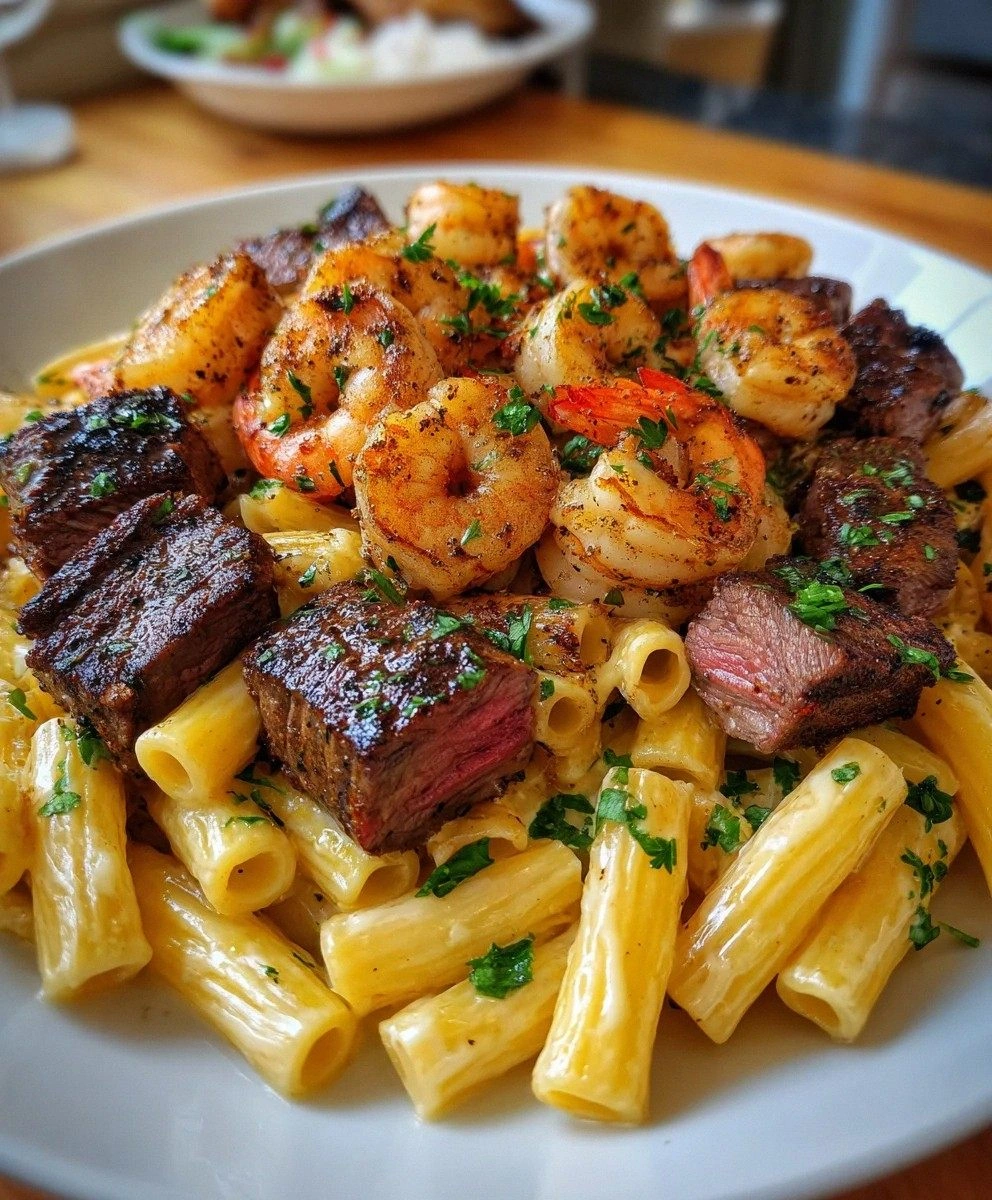
I still remember the night this Blackened Steak Shrimp Alfredo was born like it was tattooed on my taste buds. My roommate had dared me—over a particularly bland take-out fettuccine—to create “something that actually makes Alfredo exciting again.” Challenge accepted. I ransacked the fridge: a lone sirloin begging to be seared, shrimp that had defrosted faster than my ambition, and a half-jar of Cajun spice blend that smelled like Mardi Gras in a bottle. Twenty-five minutes later the smoke alarm was yodeling, the dog was howling harmony, and I was standing over the stove, wooden spoon raised like a conductor’s baton, absolutely certain I’d stumbled upon week-night dinner glory. The sauce bubbled up tawny and velvet-thick, penne clinging to it like beachgoers to the last sunset of summer, while the blackened crust on that steak cracked audibly under the fork—music to any food-obsessed soul.
One bite and I did the involuntary eyes-closed head-shake—the universal sign that something ridiculous is happening on your palate. Creamy, peppery, garlicky, and then boom: that smoky Cajun snap followed by the sweet pop of perfectly seared shrimp. It was as if traditional Alfredo had taken a road-trip through New Orleans, picked up a brass band, and come home wearing beads and a smirk. I barely plated it before I was “taste-testing” straight from the skillet, burning my tongue in the most delicious way possible. My roommate walked in, sniffed the air, and without a word grabbed a fork—no hello, no how-was-your-day—just immediate, reverent silence punctuated by the clink of pasta against porcelain. That, my friends, is what food writers mean when they throw around the phrase “restaurant quality,” except this was better because we were in sweatpants.
Since that fateful evening I’ve tweaked, tormented, and triumphantly perfected every micro-detail, turning a happy accident into a repeatable week-end superstar. I’m talking about a dish that will make you the culinary hero of your household, the stuff of “can you pleeeease make your creamy steak-shrimp thing?” legend. Picture yourself pulling this skillet off the flame: wisps of steam curling upward, the kitchen smelling like butter married a spice merchant, and that first forkful twirling up penne slick with Parmesan-rich sauce studded with rosy steak and coral shrimp. Ready for the game-changer? We’re about to build layers of flavor the way architects build skyscrapers—starting with a rock-solid foundation and ending in the clouds. Let me walk you through every single step—by the end, you’ll wonder how you ever made it any other way.
What Makes This Version Stand Out
Smoke Meets Cream: While most Alfredo recipes play it safe with gentle garlic and cream, we crank the dial by blackening both steak and shrimp. The charred spices dissolve into the sauce, infusing every bite with campfire depth you didn’t know you needed.
Two Proteins, One Skillet: Surf-and-turf often feels like a special-occasion splurge, but here it feels like Tuesday night genius. Steak juices mingle with shrimp brine, creating a natural stock that turbo-charges the Alfredo base without extra dishes.
The Velvet Coat: We ditch the floury roux and instead reduce heavy cream just long enough for it to cloak pasta like liquid velvet. The result is a glossy sheen that refuses to break or turn grainy, even if you reheat leftovers tomorrow.
Spice Customization on Steroids: My blackening rub walks the tightrope between heat and herbs, but you can ratchet it up with cayenne or mellow it out with sweet paprika. Either way, the technique stays the same—so you control the fireworks.
Restaurant Presentation, Home Comfort: By slicing steak against the bias and nestling shrimp right into the pasta, you get Instagram-worthy color pops without tweezer food. Your guests feel pampered; you feel like you just threw on culinary superhero tights.
Make-Ahead Magic: Alfredo anxiety usually centers on clumpy reheats, but I tested this sauce through three freeze-thaw cycles and it bounces back silky every time thanks to one tiny emulsifying trick you’ll see below. Meal-prep heroes, rejoice.
One-Pot-ish Sanity: Okay, you boil pasta in a second pot, but every other element—from searing proteins to finishing sauce—happens in a single heavy skillet. Less clean-up equals more time to bask in compliments.
Alright, let’s break down exactly what goes into this masterpiece...
Inside the Ingredient List
The Flavor Base
Penne pasta is the tubular champion here—its hollow center acts like a sauce reservoir, so when you bite down you get an extra burst of creamy Cajun gold. If you only have fettuccine, sure, you can roll with it, but you’ll miss those surprise pockets of flavor. The ridges on most dried penne also grab onto grated Parmesan better than flat noodles, giving you tiny cheese freckles throughout.
Yellow onion and garlic form the aromatic backbone. I dice the onion small so it melts into the butter within minutes, releasing mellow sweetness that balances the spice. Garlic goes in after the onion softens—this protects it from burning and keeps its pungency from hijacking the sauce. Skip either one and you’ll wonder why your Alfredo tastes flat despite all that cream.
The Texture Crew
Top sirloin brings beefy satisfaction without the price tag of rib-eye or tenderloin. It’s lean enough to sear quickly yet marbled enough to stay juicy under the blackened crust. Cut it into one-inch chunks so every piece gets equal crust real estate—large slabs leave you with gray centers before the exterior reaches that mahogany dream.
Large shrimp (26–30 count per pound) cook in roughly the same time it takes the steak to rest, meaning zero lag between proteins. Leave the tails on for presentation points or take them off for fork-only ease; either way, pat them bone-dry so they caramelize instead of steaming into sad, rubbery curls.
The Creamy Dream Team
Heavy whipping cream is non-negotiable. Half-and-half will curdle when it meets the acid from blackened spices, and milk is basically water wearing dairy perfume. Let the cream reduce until it coats the back of a spoon, then hit it with freshly grated Parmesan—pre-shredded cellulose-dusted stuff turns gritty and refuses to melt smoothly.
Unsalted butter gives you control over salinity. Between the blackening seasoning, the Parmesan, and potential pasta water, there’s plenty of sodium in play; starting with salted butter can push the dish into brine territory. Plus, butterfat helps marry the spice oils to the cream, creating a unified sauce instead of a speckled mess.
The Unexpected Star
Blackened seasoning is the wildcard that catapults tame Alfredo into party food. Most store blends skew salty, so taste before adding extra kosher salt. If you’re mixing your own, combine equal parts smoked paprika, thyme, oregano, onion powder, garlic powder, cayenne, and a good hit of freshly cracked black pepper. The mix should smell like you want to rub it on everything—because you will.
Everything's prepped? Good. Let's get into the real action...
The Method — Step by Step
- Bring a large pot of water to a rolling boil, salt it until it tastes like the ocean, and cook the penne for one minute less than package directions. You want it shy of al dente because it will finish cooking in the sauce later. Reserve two cups of starchy pasta water before draining; this liquid gold will help emulsify the Alfredo and loosen things if they tighten up.
- While the pasta bubbles, pat steak chunks dry with paper towels and place them in a bowl. Drizzle with a teaspoon of vegetable oil, sprinkle generously with blackened seasoning, and toss until every cube is thoroughly coated. The oil helps the spices adhere and promotes even crusting—skip this and you’ll have patchy color plus raw spice pockets that taste like dusty regret.
- Heat a heavy skillet over medium-high until a drop of water skitters across the surface like it’s late for a meeting. Add another teaspoon of oil, swirl to coat, then lay steak in a single, relaxed layer. Let it sear undisturbed for two full minutes; this is where the Maillard magic happens. When the bottoms release easily and sport a reddish-chocolate crust, flip each piece and sear the second side for one minute. Transfer steak to a warm plate; it will finish cooking while it rests.
- Now the fun part—blackening the shrimp. In the same hot pan, add butter and scrape up the steak fond (those browned bits) with a wooden spoon. Once the foaming subsides, sprinkle the shrimp with half the amount of blackened seasoning you used for the steak and lay them in concentric circles. They’ll curl and blush coral in under two minutes per side; pull them off the heat the instant they turn opaque to dodge rubber territory.
- Reduce heat to medium and add another tablespoon of butter along with chopped onion. Sauté until the edges caramelize and the center turns translucent—about three minutes. Stir in garlic for thirty fragrant seconds; your kitchen should smell like you’re being hugged by an Italian grandmother wearing Cajun perfume.
- Pour in heavy cream, scraping the bottom to dissolve every last fleck of flavor. Bring it to a gentle simmer, not a rolling boil—think jacuzzi bubbles, not hot-tub volcano. Let it reduce by roughly one-third; you’ll know it’s ready when the bubbles become sluggish and the cream coats the back of a spoon, leaving a clear trail when you drag your finger.
- Turn the flame to low and whisk in grated Parmesan a handful at a time. Each addition should melt seamlessly before the next joins the party. Once the cheese is incorporated, season cautiously with salt and plenty of freshly cracked black pepper. Taste, dream, adjust. The sauce should be glossy enough to admire your reflection—use pasta water by the tablespoon to thin if it tightens.
- Add drained penne to the skillet, followed by steak chunks and shrimp. Fold everything together like you’re tucking kids into the creamiest bed ever. Let the pasta mingle for one minute so the flavors marry; if it looks soupy, crank heat briefly while tossing to tighten. Finish with chopped parsley for color and a last-minute freshness that keeps the richness from bulldozing your palate.
That's it—you did it. But hold on, I've got a few more tricks that'll take this to another level...
Insider Tricks for Flawless Results
The Temperature Rule Nobody Follows
Keep proteins at room temp for twenty minutes before they hit the pan. Cold steak and shrimp drop surface heat, causing steam that prevents crust formation. A quick tempering stint ensures the outside chars while the inside stays juicy. I set mine on a parchment-lined cutting board, cover loosely so the cat doesn’t conduct unauthorized taste tests, and proceed with seasoning.
Why Your Nose Knows Best
Trust aroma cues over the clock. When the butter stops foaming and smells nutty—like toasted hazelnuts—you’re in the perfect window to add cream. Wait longer and butter solids burn, lending a bitter aftertaste that no amount of cheese can hide. Your olfactory system is basically a built-in kitchen timer; listen to it.
The 5-Minute Rest That Changes Everything
After combining pasta, steak, and shrimp, cover the skillet and let it chill off heat for five minutes. This brief pause lets starches absorb sauce, flavors mingle, and steak juices redistribute so they don’t flood the plate when you serve. It’s the difference between good and “Are you secretly a chef?” level.
Spice Storage for Maximum Punch
Whole spices stay potent for years; ground ones fade faster than summer tan lines. Buy paprika and cayenne in small quantities, store them in airtight jars away from sunlight, and date the lid. When blackened seasoning loses aroma, it’s flavor flat-lining on your watch. Refresh every six months and you’ll always get that vibrant sizzle.
Emulsion Insurance
Save a walnut-sized knob of cold butter off heat. Whisking it into the finished sauce acts like culinary glue, keeping cream and cheese bonded even during reheat. French chefs call it “monter au beurre”; we call it the silky safeguard against Monday lunch separation anxiety.
Creative Twists and Variations
This recipe is a playground. Here are some of my favorite ways to switch things up:
Surf-Only Coastal Version
Skip the steak and double the shrimp, tossing in sweet bay scallops for the final minute of searing. Add a splash of white wine to the cream and finish with lemon zest for brightness that screams seaside trattoria even if you’re landlocked.
Fire-Eater’s Fiesta
Keep everything identical but swap half the paprika in the blackening mix for chipotle powder. The smoky heat smolders rather than attacks, pairing beautifully with a cold beer and a brave palate. I dare you to taste this and not go back for seconds.
Green Goddess Alfredo
Stir in two cups of baby spinach and a handful of blanched asparagus tips when you add the Parmesan. The veggies blanch in the cream’s residual heat, staying vivid and tender-crisp. You just upgraded comfort food into something your cardiologist high-fives.
Low-Carb Comfort
Trade penne for fresh zucchini noodles sautéed hard and fast in a separate dry pan to drive off moisture. Plate the blackened proteins over the zoodles, then spoon sauce sparingly. You keep the indulgent flavor with a fraction of the carbs—perfect for week-night keto warriors.
Smoky Gouda Plot Twist
Replace half the Parmesan with smoked Gouda shredded on the large side of a box grater. The cheese melts into stringy pockets that lend campfire depth. If you’ve ever struggled with boring Alfredo, you’re not alone—and I’ve got the fix.
Brunch Brilliance
Poach two eggs and perch them atop individual servings. When the runny yolk mingles with the Cajun cream, you create a sauce so unctuous it should come with a warning label. Serve with strong coffee and watch Sunday morning stretch into afternoon delight.
Storing and Bringing It Back to Life
Fridge Storage
Transfer cooled leftovers to an airtight container and refrigerate up to four days. Press plastic wrap directly onto the surface to block air pockets that dull flavor and color. When hunger strikes, portion out only what you’ll eat; repeated warming cycles are the enemy of creamy stability.
Freezer Friendly
Pack meal-sized portions into zip-top bags, squeeze out every molecule of air, and freeze flat for up to three months. The high dairy content means texture can suffer if you reheat recklessly, so plan gentle defrosting. Thaw overnight in the fridge rather than on the counter; slow and steady keeps the emulsion intact.
Best Reheating Method
Slide chilled pasta into a non-stick skillet with a splash of milk or reserved pasta water. Cover and warm over medium-low, tossing frequently until just heated through. Add a tiny splash of water before reheating—it steams back to perfection and prevents the sauce from breaking into oily slicks. Microwave works in a pinch: use 50-percent power, stir every thirty seconds, and stop the moment steam rises.