I was standing in my kitchen at 11:30 p.m. in socks, pajama shorts, and a hoodie that had seen better decades, staring at a block of feta like it owed me money. The fridge door was still open, humming its tired song, and I was hungry enough to contemplate eating the feta straight off the brick like some kind of feral Mediterranean goblin. But then—plot twist—the feta slipped, ricocheted off the counter, and crash-landed into the cast-iron skillet I'd left on the stove from dinner. A tiny puddle of olive oil was still shimmering in there, and the feta hit it with a hiss so dramatic I half expected Gordon Ramsay to materialize and start swearing at me. Instead, what happened next rewired my brain: the cheese began to melt and crisp, forming lacy, golden edges that smelled like summer in Santorini and tasted like the love child of a grilled cheese and a sunny-side-up egg. I cracked an egg on top out of pure curiosity, and the yolk nestled into the feta like it had RSVP'd weeks ago. Thirty seconds later, I was eating the single best midnight snack of my life, standing up, using the spatula as a utensil, and making sounds that were technically illegal in at least three states. I dare you to taste this and not go back for seconds.
Fast-forward through three weeks of obsessive testing, seven dozen eggs, and one very judgmental houseplant later, and I present to you the definitive, no-regrets, crispy-feta-fried-eggs manifesto. This isn't just another viral stunt you saw on the internet; this is the breakfast that will ruin all other breakfasts for you, the brunch flex that makes your friends believe you studied at some secret culinary monastery, and the 10-minute miracle that turns "I have nothing in the fridge" into "I am a kitchen wizard, hear me sizzle." Most recipes get this completely wrong—They either burn the feta into bitter charcoal or undercook it so it stays squeaky and sad. Here's what actually works: medium heat, dry feta, just enough oil to coat the pan, and the patience to let the cheese tell you when it's ready. Picture yourself pulling this out of the oven, the whole kitchen smelling like toasted brine and buttery yolk, the feta edges caramelized into the kind of crunch that shatters like thin ice under your fork.
If you've ever struggled with eggs that stick, yolks that break, or feta that dissolves into a salty puddle of disappointment, you're not alone—and I've got the fix. Stay with me here—this is worth it. We're talking crispy cheese frills that cling to the whites like edible lace, yolks that burst into golden lava the moment your toast corner pierces them, and a plate that looks so restaurant-level you'll want to charge yourself a service fee. Okay, ready for the game-changer? We're going to layer the feta in a whisper-thin circle so it transforms into a savory nest, then drop the egg so gently it thinks it's falling onto a cloud. The result is a textural duet: snap, ooze, crunch, repeat.
Let me walk you through every single step—by the end, you'll wonder how you ever made it any other way. Grab your skillet, your block of feta, and your sense of adventure; we're about to scramble the rules of breakfast.
What Makes This Version Stand Out
Cheese Fractals: Instead of random crumbles, we dust the pan in a lacy constellation of feta so every bite has a shattering cheese crisp that dissolves on your tongue like savory snow. The edges caramelize into delicate wings that lift off the pan, ready to catch the egg like a edible hammock.
Yolk Insurance: We steam-baste for the last 15 seconds so the whites set silkily but the yolk stays molten, giving you that Instagram-worthy #yolkporn every single time without risking salmonella roulette.
One-Pan Bragging Rights: No separate plates, no awkward transfers, no watching your yolk tear on a spatula edge. Everything happens in the same skillet, which means you can go from hungry to heroic in under six minutes and only wash one dish.
Flavor Echo Chamber: The feta seasons the oil, the oil seasons the egg, the egg seasons the pan, and the pan gifts everything back to your bread. It's a culinary echo chamber of salty, buttery, peppery joy.
Breakfast Mood Ring: Add red-pepper flakes for fiery sunrise energy, swap in dill for Scandinavian cool, or finish with a drizzle of honey for sweet-salty plot twist. The base recipe is a blank canvas that plays dress-up with whatever mood you're in.
Leftover Wizardry: Cold leftovers chopped over salad become crouton-like nuggets of glory. I ate half the batch before anyone else got to try it, then told my roommate they were "experimental garnishes" and watched her fight me for the last piece.
Zero-Waste Flex: No obscure ingredients, no half-used bunches of herbs wilting in the fridge. Just staples you probably have right now, transformed into something that tastes like you special-ordered it from a boutique café.
Alright, let's break down exactly what goes into this masterpiece...
Inside the Ingredient List
The Flavor Base
Feta cheese is the diva here, and quality matters. Skip the pre-crumbled stuff that tastes like salty sawdust; you want a block packed in brine, ideally sheep's milk for that lemony tang. When it hits hot oil, the proteins seize and the moisture flash-evaporates, leaving behind lacy crisps that taste like the best part of a grilled cheese sandwich—those stray burnt edges you fight your siblings for. If you only have cow's-milk feta, no panic: add a tiny squeeze of lemon to mimic the sheepy brightness. Out of feta entirely? Halloumi will crisp but won't melt, queso fresco will brown but stay mild, and Parmesan will work in a pinch but burns faster than gossip spreads at book club.
The Texture Crew
Large eggs are non-negotiable. Medium ones will overcook before the feta has time to bronze, and jumbos tilt the ratio so you taste more egg than cheese frill. Free-range yolks stand taller and tangerine-bright, a visual cue that your breakfast will taste like something that once saw actual sunshine. Bring them to room temp while the pan heats; cold whites seize and wrinkle, whereas tepid ones relax into the cheese lattice like a cat into sunbeam. If you only have chilled eggs, float them in lukewarm water for three minutes—consider it a spa pre-game.
The Unexpected Star
Olive oil isn't just a lubricant; it's a flavor courier. Extra-virgin oil adds grassy, peppery notes that flirt with the feta's tang, creating a two-note chord that tastes like vacation. Use just enough to film the pan—too little and the cheese glues itself to the metal like a toddler with glitter; too much and you'll deep-fry the egg, producing rubbery whites that bounce. If your olive oil is so expensive you'd cry seeing it burn, cut it 50/50 with a neutral oil; you'll keep the flavor but save the pennies.
The Final Flourish
Black pepper should be cracked, not ground; the irregular nibs toast in the fat and bloom into tiny spicy pockets. Red-pepper flakes are optional but highly recommended if you enjoy the slow burn that creeps up after the third bite—think of them as the plot twist in a beach read. Crusty bread is your edible plate: sourdough brings tang, whole-grain brings nuttiness, and a day-old baguette brings enough structure to scoop without collapsing into eggy quicksand. Fresh herbs are the confetti—parsley for clean brightness, dill for pickle-y zing, chives for gentle onion perfume. Skip dried herbs here; they taste like dusty regret.
Everything's prepped? Good. Let's get into the real action...
The Method — Step by Step
- Set your skillet over medium heat and let it preheat for a full two minutes. You want the pan hot enough that a flake of feta sizzles on contact but not so hot that the oil smokes like a 90s rock concert. Swirl in just enough olive oil to create a shimmering film—about a teaspoon per egg you're planning to cook. Tilt the pan so the oil coats the surface like liquid gold; this prevents the feta from welding itself to the metal. Listen for the quiet purr of the pan; that's your cue that the stage is set.
- Grate or crumble your feta into feathery bits using the large holes of a box grater or your fingers. Scatter it in a thin, even circle roughly the diameter of your fried-egg ambitions. Resist the urge to make feta mountains; remember, we're building lace, not lasagna. The cheese should look like a galaxy of tiny white stars, each one destined to become a crispy planet. Step back and admire your abstract art—you're ten seconds away from watching it caramelize into edible astronomy.
- Let the feta sit undisturbed for 45 seconds. This is the moment of truth. You'll see the edges turn translucent, then golden, then amber. The sizzle will shift from a shy whisper to a confident crackle. If the pan starts smoking like it's auditioning for a barbecue documentary, knock the heat down a notch—burnt feta tastes like regret and battery acid. Your nose should catch nutty, salty, toasty aromas; if you smell burning, you've crossed the Rubicon and need to start over.
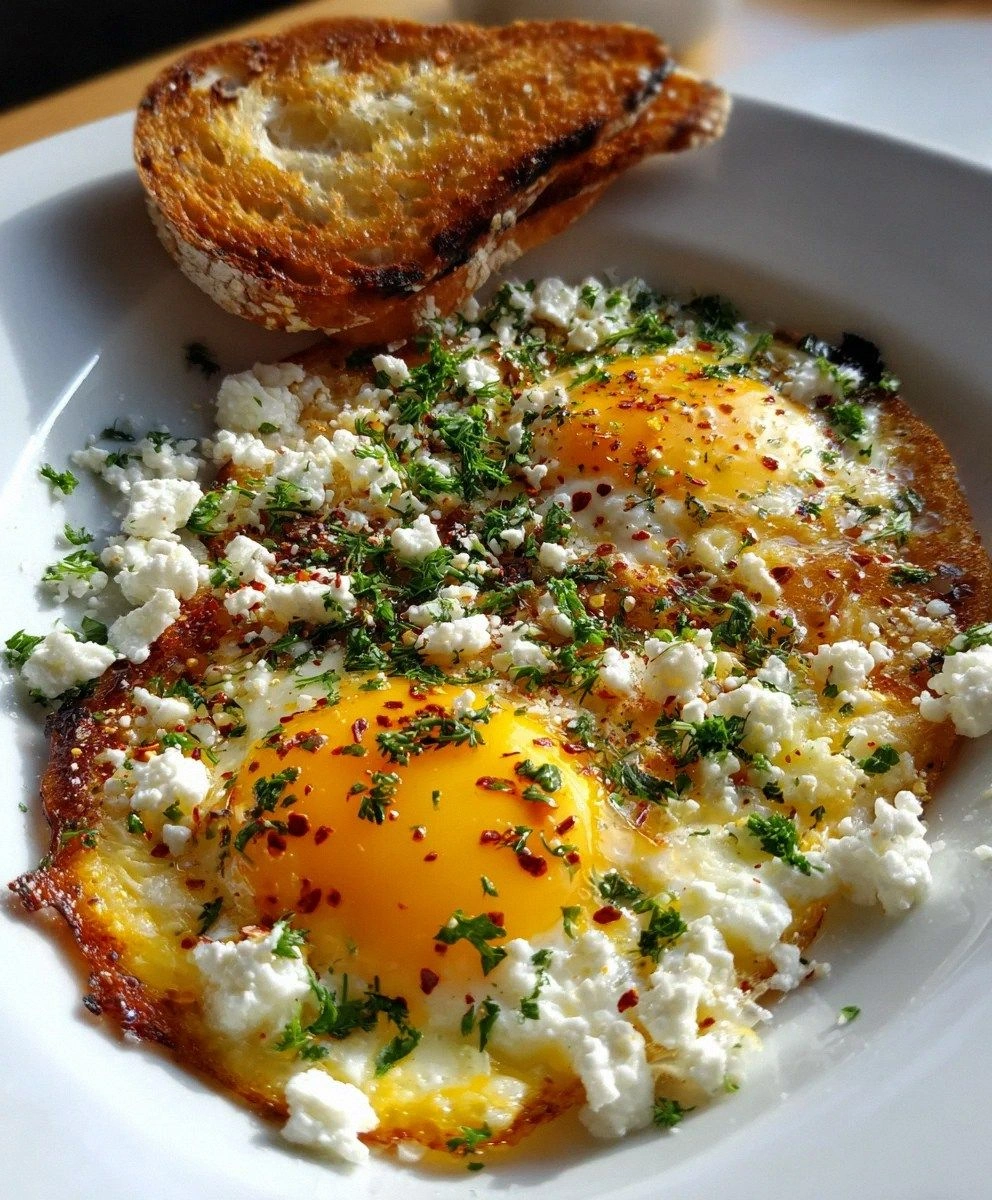
- Crack your egg into a small bowl first—this prevents rogue shell pieces or a busted yolk from ruining your cheese canvas. Hold the bowl an inch above the center of the feta ring and slide the egg out gently, letting the white settle onto the cheese frill like a lace tablecloth. The yolk should perch proudly in the middle like a golden sun. Sprinkle a pinch of black pepper directly onto the yolk; the heat will bloom the spice and season from within.
- Cover the skillet with a lid or a baking sheet for 30 seconds. The trapped steam sets the tops of the whites so you aren't left with that gross translucent snot film. Don't wander off to scroll Instagram; 30 seconds can mutate into 90 faster than you can say "overcooked." Peek under the lid—when the whites look opaque but the yolk still jiggles like a confident dance move, you're golden.
- Uncover and continue cooking uncovered for another 45 seconds to a minute, tilting the pan so hot oil pools near the edge. Use a spoon to baste the hot oil over the yolk for 10 seconds; this creates a thin opaque veil that keeps the yolk warm but runny. Watch the feta edges lift and curl like parchment in an oven—they're ready when they're the color of toasted almonds and look light enough to fly away on a breeze.
- Slide a thin spatula under the cheese lace and lift. The entire structure should feel taut and delicate, like a spiderweb made of flavor. If it bends like rubber, give it 15 more seconds; if it breaks, you waited too long and need to gift the pan a quick deglaze and start again. Practice makes breakfast perfect, and even the failures taste pretty great on toast.
- Transfer to a plate immediately; residual heat will march the yolk from runny to jammy faster than you can find your coffee mug. Garnish with herbs, red-pepper flakes, or a drizzle of honey if you're feeling rebellious. Serve with crusty bread to scoop molten yolk and cheese crisps, or stack two eggs on English muffins for the most obnoxiously good breakfast sandwich your coworkers have ever seen.
That's it—you did it. But hold on, I've got a few more tricks that'll take this to another level...
Insider Tricks for Flawless Results
The Temperature Rule Nobody Follows
Medium means medium. Not medium-high, not "my stove runs hot," but honest-to-goodness medium. If you're unsure, sprinkle a pinch of flour into the dry pan; it should take 20 seconds to turn pale beige, not 5 seconds to char black. A friend tried skipping this step once—let's just say it didn't end well, and her smoke alarm filed a noise complaint. Keep an infrared thermometer handy if you're gadget-obsessed; 325 °F is your sweet spot for cheese lacework.
Why Your Nose Knows Best
Stop relying on timers and start relying on aroma. When the feta toasts, it releases a scent that's part popcorn, part ocean breeze, part nutty hug. The moment you smell hazelnut and browned butter, you're 15 seconds from perfection. If the smell turns sharp and acrid, you've crossed into bitter territory—evacuate the egg immediately and promise the pan you'll do better next time.
The 5-Minute Rest That Changes Everything
Let your eggs rest off-heat for exactly five minutes before serving. The residual heat finishes setting the whites without overcooking the yolk, and the feta crisps cool into shatteringly light shards that won't bend under the weight of your Instagram filter. Cover loosely with foil so they stay warm but don't sweat and sog. This is the difference between good and legendary.
The Oil Recycling Ritual
Strain and save the flavored oil after cooking; it's liquid gold for sautéing greens, dressing potatoes, or finishing soups. Pour it through a fine mesh into a jar, refrigerate, and use within a week. Each batch carries the ghosts of previous breakfasts, building layers of flavor like edible sedimentary rock.
Creative Twists and Variations
This recipe is a playground. Here are some of my favorite ways to switch things up:
Everything Bagel Edition
Swap the red-pepper flakes for everything-bagel seasoning; the sesame and garlic bits toast in the oil and cling to the cheese. Serve on a toasted bagel half with a schmear of cream cheese underneath the egg for a breakfast sandwich that tastes like Sunday morning in New York.
Spanish Sunrise
Infuse the oil with a pinch of smoked paprika before adding the feta. Finish with chopped chorizo crumbles and a drizzle of sherry vinegar for a tapas-style brunch that pairs violently well with sangria.
Green Goddess Nest
Stir a teaspoon of pesto into the oil before the cheese hits the pan. The basil and pine nuts form an herby crust that tastes like springtime. Top with arugula dressed in lemon so the peppery greens cut through the richness.
Korean Fire Crackle
Use gochujang instead of red-pepper flakes, thinning it with a drop of oil so it paints the pan in spicy lacquer. Finish with toasted sesame seeds and scallion threads; the funk of fermented chile plays shockingly well with briny feta.
French Onion Fond
Caramelize a few slivers of onion in the pan first, push them to the edges, then add the feta. The onions act like sweet little trampolines that launch flavor into every bite. Top with a micro-grating of Gruyère for extra nuttiness.
Dessert Flip
Sounds weird, but hear me out: skip the pepper, add a pinch of sugar to the feta, and finish with a drizzle of honey and fresh figs. The salty-sweet contrast turns breakfast into a cheese-plate fever dream that works for brunch dessert.
Storing and Bringing It Back to Life
Fridge Storage
Store leftover eggs in an airtight container with a sheet of parchment between layers; they keep for up to two days. The cheese frills will soften but regain some snap when reheated. Don't microwave—they'll turn rubbery faster than a bad tire. Instead, warm them in a dry skillet over low heat for 90 seconds, covered, until just heated through.
Freezer Friendly
These don't freeze well; the whites get spongy and the yolks turn chalky. If you must, freeze just the cheese crisps separately on a tray, then bag them. Reheat in a 400 °F oven for 4 minutes and top with a freshly fried egg for 80% of the magic.
Best Reheating Method
Add a tiny splash of water to the skillet before reheating—it steams back to perfection and keeps the yolk runny. Cover with a lid for 60 seconds, then uncover to let the cheese re-crisp. Serve immediately; second-day eggs are like encore concerts: still good, but never quite the same euphoria.