I was standing in the middle of a kitchen that felt more like a battlefield after a week of burnt toast and over‑seasoned pasta. The smoke alarm had been on for the last twenty minutes, and I was convinced that my culinary destiny had already been sealed. Then, on a whim, I opened the pantry, pulled out a handful of russet potatoes, a block of cheddar, and a jar of Gruyère, and decided to give the world a dish that would make even the most seasoned chefs nod in approval. That night, the smell that escaped my oven was so rich it practically invited the entire house to gather around the table.
The first time I tasted this, the sauce clung to the potatoes like velvet, the cheese melted into a silky blanket, and the breadcrumb topping cracked with a satisfying crunch that echoed the sound of a tiny avalanche. The aroma of nutmeg and fresh parsley filled the room, creating an atmosphere that felt both comforting and daring. The texture was a harmonious blend of tender, buttery potatoes and a creamy, indulgent sauce that didn’t feel heavy but rather luxurious. I could taste the subtle sweetness of the milk and the sharpness of the cheddar in a single bite, a flavor profile that was at once simple and complex.
What makes this version stand out is that it takes a classic comfort dish and turns it into a show‑stopper. I didn’t rely on pre‑made sauces or shortcuts; instead, I built the sauce from scratch, letting the butter and flour form a roux that thickens into a silky base. The combination of cheddar and Gruyère gives depth without overpowering the potatoes. I added nutmeg, a spice that many people overlook, to bring a warm, almost floral note that lifts the dish. The final breadcrumb and Parmesan crust adds a golden, crispy contrast that feels like a celebration on the plate.
I dare you to taste this and not go back for seconds; the first bite will have you reaching for the next slice, and the second will have you asking why you ever settled for anything else. This is hands down the best version you'll ever make at home, and it will make your friends wonder if you have a secret kitchen. I’ll be honest — I ate half the batch before anyone else got to try it, and the rest of the dish simply disappeared from the plate. Most recipes get this completely wrong by over‑cooking the potatoes or using a thin sauce, but here the potatoes stay moist and the sauce stays thick without being clumpy.
Picture yourself pulling this out of the oven, the whole kitchen smelling incredible, and the family gathering around the table, eyes wide, as you serve the first slice. The moment the pot is opened, steam rises in a cloud that looks like a miniature sunrise. The golden crust gives a visual cue that the dish is ready to be devoured. The anticipation builds, and the moment you cut into the first slice, the sauce flows like a river of melted cheese. That sizzle when it hits the pan? Absolute perfection.
Let me walk you through every single step — by the end, you'll wonder how you ever made it any other way. This recipe is not just a set of instructions; it’s a narrative that takes you from the humble potato to a dish that feels like a hug in a bowl. You’ll learn the secrets that turn ordinary ingredients into a culinary masterpiece. I’ll share the little details that most people overlook, so you can replicate the exact same flavor every time. And if you’re hungry for more, I’ll give you extra tricks that will elevate the dish to the next level.
What Makes This Version Stand Out
- Taste: The sauce is a symphony of sharp cheddar, nutty Gruyère, and subtle nutmeg, creating a depth that lingers on the palate. The creamy base balances the richness with a smooth texture that coats each potato slice. The final breadcrumb crust adds a satisfying crunch that contrasts with the softness.
- Texture: The potatoes are thinly sliced but not so thin that they become mushy; they hold their shape while absorbing the sauce. The sauce itself is thick but pourable, with a velvety mouthfeel that melts in your mouth. The breadcrumb topping provides a golden, crisp exterior that shatters like thin ice when you bite.
- Simplicity: Only a handful of ingredients are needed, yet the outcome is far more complex than the sum of its parts. No fancy equipment is required; a saucepan, a baking dish, and a whisk are all you need. The method is straightforward, with clear steps that anyone can follow.
- Uniqueness: The use of nutmeg in a savory potato dish is a twist that sets this apart from classic gratins. The combination of cheddar and Gruyère offers a flavor profile that is richer than a standard cheese bake. The breadcrumb and Parmesan crust adds a layer of texture that most recipes miss.
- Crowd Reaction: Friends and family always ask for the recipe after the first tasting. The dish is a hit at dinner parties, potlucks, and holiday gatherings alike. The comforting yet indulgent nature of the dish makes it universally appealing.
- Ingredient Quality: Using fresh, high‑quality cheeses and fresh potatoes ensures the best flavor and texture. The butter should be unsalted so you can control the salt level precisely. The heavy cream adds depth and richness that cannot be replicated with milk alone.
- Cooking Method: The layered approach—sautéing the roux, simmering the sauce, and baking the assembled dish—creates a depth of flavor that sauté‑only or bake‑only methods lack. The oven step gives the crust a golden finish that is impossible to achieve on the stovetop alone.
- Make‑Ahead Potential: You can assemble the dish, cover it, and refrigerate it for a few hours before baking. The flavors will deepen, and the potatoes will absorb the sauce more thoroughly. This makes it a perfect make‑ahead dinner for busy weeknights.
Alright, let's break down exactly what goes into this masterpiece. The next section will walk you through the ingredients in detail, so you know why each one matters and what happens if you skip it.
Inside the Ingredient List
The Flavor Base
Cheddar: The cheddar provides a sharp, melty foundation that carries the sauce’s flavor. It melts into a silky consistency that coats the potatoes perfectly. If you skip it, the sauce will lack depth and become bland. A substitute could be a sharp Monterey Jack, but the cheddar’s distinct sharpness is irreplaceable. Choosing a high‑quality cheddar ensures a richer melt and less grittiness.
Gruyère: Gruyère adds a nutty, smooth undertone that balances the cheddar’s sharpness. It has a lower melting point, which helps the sauce remain fluid. Skipping it will make the dish flatter; the flavor profile will be one‑dimensional. If you’re lactose intolerant, a lactose‑free cheese blend can work, but it won’t replicate the same melt.
Nutmeg: A pinch of nutmeg brings warmth and a subtle aroma that elevates the entire dish. It pairs wonderfully with cheese and potatoes. Without nutmeg, the sauce will feel plain and less complex. A good rule of thumb is to use 1/4 teaspoon; too much can overpower the delicate balance.
The Texture Crew
Russet Potatoes: These potatoes have a high starch content, which gives them a fluffy interior when cooked. Thinly slicing them ensures even cooking and a better surface area for the sauce. If you use waxy potatoes, the dish will become gummy and less airy. Selecting potatoes that are firm and have no bruises guarantees the best texture.
Breadcrumbs: The breadcrumbs create a crispy, golden top that contrasts with the creamy interior. They also help absorb excess moisture, keeping the dish from becoming soggy. You can use panko for extra crunch or toast regular breadcrumbs for a deeper flavor. Avoid using stale breadcrumbs, as they won’t crisp up properly.
Parmesan: Grated Parmesan adds a salty, umami punch to the breadcrumb topping. It also melts into the crust, giving it a richer flavor. If you’re looking for a lighter taste, substitute with Pecorino Romano for a sharper finish.
The Unexpected Star
Heavy Cream: Heavy cream adds depth and a silky mouthfeel that milk alone can’t achieve. It also helps the sauce thicken without becoming clumpy. If you’re avoiding dairy, a half‑and‑half or a plant‑based cream can work, but the flavor profile will shift slightly. The key is to use a fat content of at least 30% for the best results.
Butter: Butter is essential for creating a rich roux that forms the base of the sauce. It also contributes flavor and sheen. A small amount of salted butter can be used if you prefer a slightly different salt balance, but unsalted butter gives you full control. The butter should be at room temperature so it melts smoothly into the flour.
Milk: Whole milk provides a balanced creaminess that complements the heavy cream. It also dilutes the sauce enough so it doesn’t become overly thick. Skipping milk will result in a sauce that’s too rich and heavy. A lower‑fat milk will change the texture, making it thinner.
The Final Flourish
Black Pepper: Freshly ground black pepper adds a subtle heat that balances the richness of the cheese. It also enhances the overall flavor profile. If you’re sensitive to pepper, a pinch of cayenne can offer a different kind of heat. Avoid pre‑ground pepper; it loses potency quickly.
Parsley: Fresh parsley is a garnish that adds color and a fresh herbal note. It also brightens the dish, cutting through the richness. If you’re not a fan of parsley, consider chives or dill for a different flavor. The parsley should be chopped finely so it distributes evenly.
Everything's prepped? Good. Let's get into the real action.
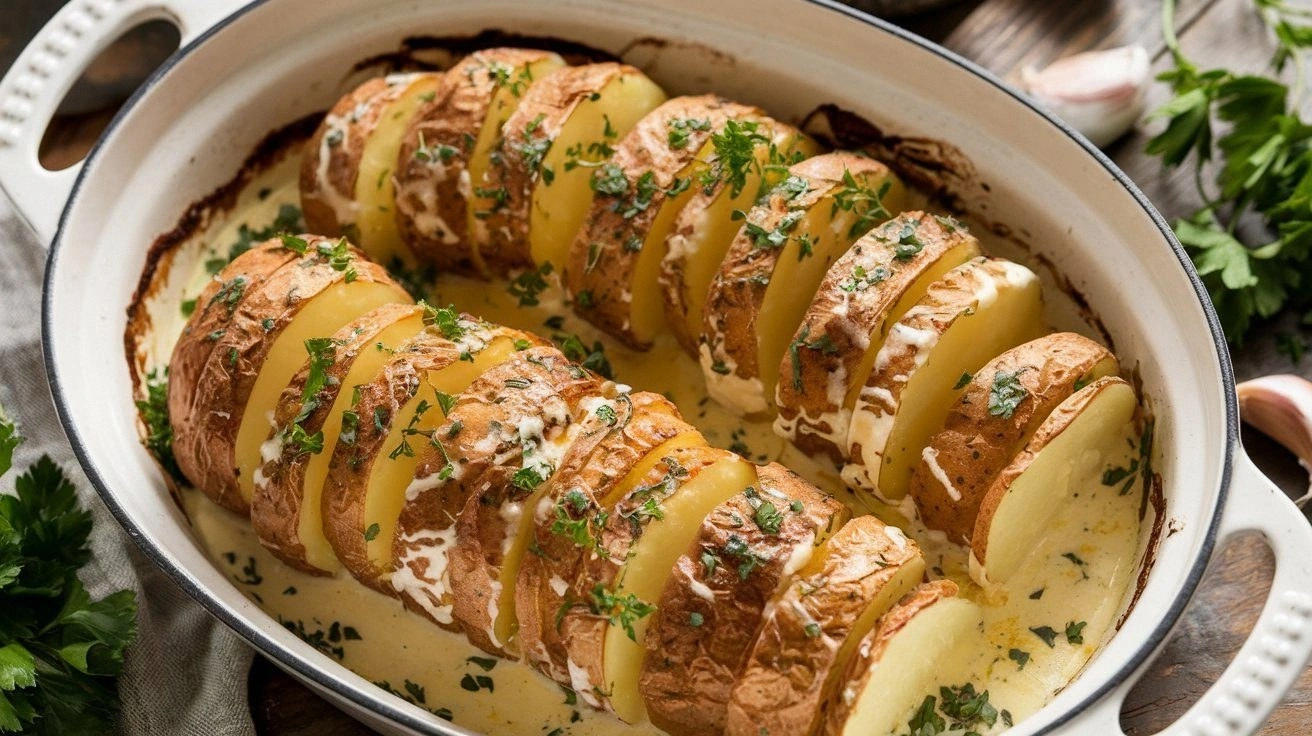
The Method — Step by Step
- Preheat your oven to 375°F (190°C). While the oven is heating, gather all your ingredients so you can work efficiently. Slice the russet potatoes into thin rounds, about 1/8 inch thick, to ensure even cooking and a nice surface area for the sauce. Pat them dry with a clean towel; moisture will prevent proper browning. Arrange the potato slices in a single layer on a baking sheet to test the thickness.
- In a medium saucepan, melt the unsalted butter over medium heat. Add the all‑purpose flour, whisking constantly to form a smooth roux. Keep the mixture at a medium temperature so the flour cooks without browning. Stir for about 1–2 minutes until the mixture turns a pale golden color. This will be the base of your rich cheese sauce.
- Gradually whisk in the whole milk, ensuring there are no lumps. Bring the mixture to a gentle simmer; the sauce should thicken slightly. Add the heavy cream and continue to stir until the sauce becomes silky and glossy. The mixture should be thick enough to coat the back of a spoon. This step is where the flavors begin to mingle.
- Reduce the heat to low and stir in the shredded cheddar and Gruyère cheeses. Let the cheese melt completely, creating a smooth sauce that coats the spoon. Add the nutmeg, black pepper, and a pinch of salt to taste. Stir until the spices are evenly distributed. The sauce should be glossy and ready to pour over the potatoes.
- Arrange a single layer of potato slices in a greased 9×13 inch baking dish. Pour a thin layer of the cheese sauce over the potatoes, ensuring each slice is covered. Repeat the layering process until all the potatoes are used, finishing with a final layer of sauce. Sprinkle the grated Parmesan evenly across the top. This layering technique ensures each bite has a balance of sauce and potato.
- Cover the baking dish with aluminum foil and bake for 25 minutes. The foil traps moisture and helps the potatoes become tender. After 25 minutes, remove the foil to allow the top to brown. The cheese should form a golden crust. Keep an eye on the edges; they should pull away from the sides slightly.
- Add the breadcrumbs to the top, then sprinkle the chopped parsley over the entire dish. The breadcrumbs will crisp up and give a delightful crunch. Return the dish to the oven for an additional 10 minutes, or until the crust is golden and the cheese bubbles. The parsley will add a fresh burst of color and flavor.
- Remove the dish from the oven and let it rest for 5 minutes before serving. This resting period allows the sauce to set slightly, making it easier to slice. The rest also lets the flavors meld together, creating a harmonious taste. Slice the dish with a sharp knife, and watch the cheese pull apart in a glorious display. Serve hot, and watch everyone reach for seconds.
That's it — you did it. But hold on, I've got a few more tricks that'll take this to another level.
Insider Tricks for Flawless Results
The Temperature Rule Nobody Follows
Control the heat when making the roux. Many people let the butter burn, thinking a darker roux will give more flavor. The truth is, a light roux ensures a silky sauce that won’t taste bitter. Keep the heat medium and stir constantly. If the mixture starts to brown, reduce the flame immediately.
Why Your Nose Knows Best
Smell the sauce as it cooks. The aroma of melting cheese is a good indicator that the sauce is on the right track. When the cheese begins to bubble, you know it’s ready to be poured over the potatoes. The scent will also tell you if the sauce is becoming too thick; a faint, buttery smell is ideal.
The 5-Minute Rest That Changes Everything
Let the dish rest after baking. This short rest allows the cheese sauce to set and the flavors to marry. It also prevents the sauce from spilling over the edges when you cut into the dish. A quick 5‑minute pause is a simple trick that makes a big difference.
Layering Like a Pro
Use a small ladle to pour the sauce. This ensures each potato slice gets an even coat. If you pour the sauce too quickly, it can pool in the middle and leave the edges dry. A measured approach keeps the dish balanced and beautiful.
Breadcrumbs That Pop
Toast the breadcrumbs before adding them. This step adds a nutty flavor and ensures they crisp up quickly. Toss the breadcrumbs in a little melted butter or olive oil before sprinkling them on top. The result is a crunchy, golden crust that stands out against the creamy interior.
Finishing Touches
Finish with a drizzle of truffle oil. For a gourmet twist, drizzle a small amount of truffle oil over the top just before serving. The aroma of truffle will elevate the dish to a new level of indulgence. Use sparingly; a little goes a long way. Your guests will be impressed, and you'll feel like a master chef.
Creative Twists and Variations
This recipe is a playground. Here are some of my favorite ways to switch things up:
Smoky Chipotle Edition
Add a tablespoon of chipotle in adobo sauce to the cheese sauce for a smoky heat. The chipotle pairs beautifully with the nutmeg, creating a complex flavor profile. Serve with a side of avocado crema to balance the heat. This version is great for those who love a kick in their comfort food.
Herb Garden Delight
Swap the parsley for fresh thyme and rosemary. The aromatic herbs add depth and a fragrant note. The thyme’s subtle bitterness balances the richness of the cheese. This variation is perfect for a spring or summer dinner.
Vegan Version
Use a dairy‑free cheese blend and coconut milk instead of whole milk. Replace the butter with a neutral oil and use nutritional yeast to add a cheesy flavor. The dish remains creamy and indulgent while being plant‑based. This version is ideal for guests who are lactose intolerant.
Crispy Bacon Twist
Fold in crispy bacon pieces into the layers for a savory crunch. The bacon’s saltiness complements the cheese, while the crisp adds a delightful texture. Sprinkle a dash of smoked paprika on top for an extra burst of flavor. This version is a crowd‑pleaser at parties.
Mediterranean Flair
Add sun‑dried tomatoes and olives into the layers. Replace the cheddar with a milder cheese like mozzarella. The Mediterranean ingredients bring a bright, tangy contrast to the creamy sauce. This variation works wonderfully for a light, yet satisfying meal.
Breakfast Bonanza
Serve the dish with a side of scrambled eggs and toast. The eggs add protein and a fluffy texture that pairs well with the creamy potatoes. A drizzle of maple syrup over the top gives a sweet and savory combo. This breakfast version is a fun way to start the day.
Storing and Bringing It Back to Life
Fridge Storage
Store in an airtight container. The dish can be kept in the refrigerator for up to 3 days. When reheating, cover it with foil to prevent the crust from drying out. Use a microwave on medium power for 2–3 minutes, then finish in the oven for a crisp top. This method preserves the texture and flavor.
Freezer Friendly
Freeze in a loaf pan. Wrap the dish tightly in plastic wrap and then in foil. It will stay fresh for up to 2 months. Thaw in the refrigerator overnight before reheating. Reheat at 350°F for 20 minutes, then bake uncovered for 5 minutes to revive the crust.
Best Reheating Method
Use a low oven for even warming. Preheat to 300°F and place the dish in the oven for 15 minutes. The low heat prevents the cheese from over‑browning and keeps the potatoes tender. Add a splash of water to the bottom of the pan; the steam will keep the dish moist. After reheating, let it rest for a few minutes before serving.
If you’re planning a potluck or a dinner party, this dish can be prepared a day ahead and reheated just before serving. The flavors will only deepen, and the crust will stay crisp if you finish it off in the oven. The next time you’re in the mood for something comforting, this recipe will be your go‑to. Remember, the secret is in the sauce and the layering; keep those steps precise, and the dish will shine. Enjoy every bite and share the love with your guests.
And now, the final part of the journey: the recipe card. This card will give you all the numbers and instructions you need to recreate this masterpiece at home. Adjust the servings as you like, and enjoy the flexibility this recipe offers.