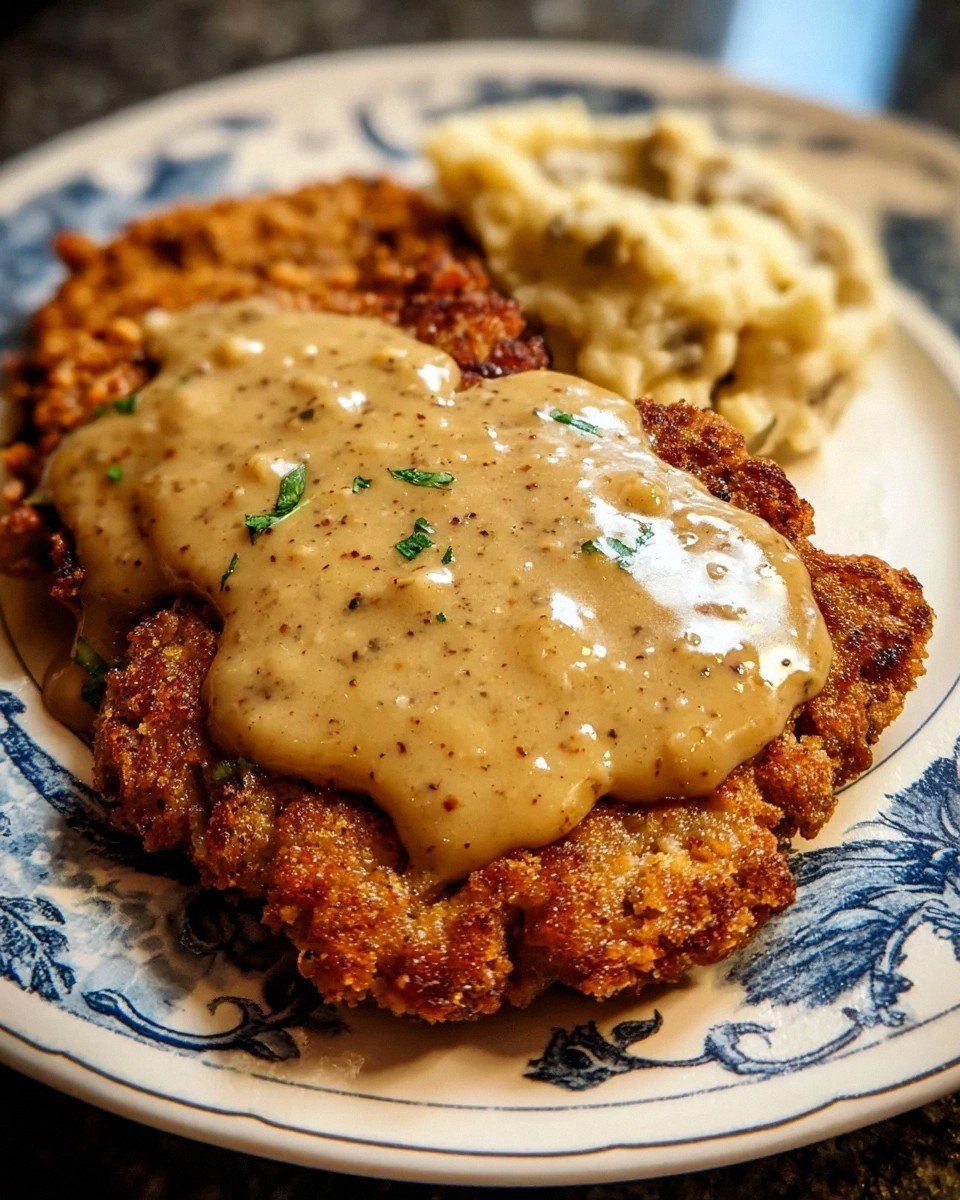
I’ll be honest — I ate half the batch before anyone else got to try it. It all started on a rainy Tuesday when my roommate dared me to make “the ultimate comfort food” using only what we had in the pantry. I tossed a few cube steaks into the pan, a splash of oil, and a mystery drizzle of cream, and the kitchen instantly smelled like a Southern diner on steroids. The first bite was a revelation: a crunchy, golden crust that gave way to a melt‑in‑your‑mouth interior, all smothered in a gravy so silky it could have been poured over a cloud. That moment made me realize I had stumbled upon a version that eclipses every other chicken fried steak gravy you’ve ever tried.
Picture yourself pulling this out of the pan, the whole kitchen smelling incredible, the steam rising like a fragrant curtain that promises pure indulgence. The crust cracks just enough to let a little of that buttery gravy seep through, creating a symphony of textures that dance on the tongue. You’ll hear the sizzle as the steaks hit the oil, a sound so satisfying it’s practically a culinary applause. The first forkful delivers a buttery, pepper‑kissed bite that makes you question every other dinner you’ve ever settled for. I dare you to taste this and not go back for seconds.
What makes this version stand out is a secret weapon most recipes completely ignore: pan drippings turned into a gravy base, then enriched with heavy cream and a splash of milk for that velvet finish. Most recipes get this completely wrong by using pre‑made gravy packets that taste like cardboard. Here, we build flavor from the ground up, layering salt, garlic powder, and a whisper of cayenne to give the gravy a subtle heat that never overwhelms. The result is a gravy that clings to the steak like a lover’s embrace, coating every crevice with creamy decadence.
But the real game‑changer? A quick egg‑milk wash that guarantees the flour coating adheres like a second skin, ensuring the crust stays crisp even after the gravy has been ladled over it. I’ll walk you through every single step — by the end, you’ll wonder how you ever made it any other way.
What Makes This Version Stand Out
- Flavor Explosion: The combination of kosher salt, garlic powder, and a pinch of cayenne creates a layered taste that builds from the first bite to the last, making every mouthful exciting.
- Texture Harmony: A crunchy, golden crust meets a buttery, velvety gravy, delivering a contrast that feels like fireworks in your mouth.
- Simplicity: Despite the gourmet feel, the ingredient list is pantry‑friendly and the steps are straightforward enough for a weekday dinner.
- Unique Ingredient Twist: Using pan drippings as the gravy’s foundation adds depth that store‑bought mixes can never replicate.
- Crowd Reaction: Guests often claim it’s the best comfort food they’ve ever tasted, and they’ll be begging for the recipe within minutes.
- Make‑Ahead Potential: The steaks can be fried ahead of time, and the gravy reheats beautifully, making it perfect for meal prep or a relaxed weekend brunch.
Inside the Ingredient List
The Flavor Base
The backbone of any great gravy is a well‑seasoned base. Kosher salt does more than just season; it draws out moisture from the meat, intensifying the umami and helping the crust adhere to the steak. Garlic powder adds a mellow, aromatic depth, while cayenne introduces a whisper of heat that awakens the palate without stealing the spotlight. If you’re sensitive to spice, reduce the cayenne to a quarter teaspoon, but don’t skip it entirely—its subtle kick is part of what makes this gravy unforgettable.
The Texture Crew
All‑purpose flour is the star of the coating, creating that signature crunch that shatters like thin ice when you bite into it. The egg‑milk wash is the unsung hero, acting as the glue that binds the flour to the steak, ensuring an even, golden crust. For a gluten‑free twist, swap the flour for a 1:1 gluten‑free blend; the texture will remain delightfully crisp. Canola or peanut oil provides the high smoke point needed for a deep, even fry without imparting any unwanted flavors.
The Unexpected Star
Pan drippings are often discarded, yet they hold a concentrated flavor that turns a simple gravy into a luxurious sauce. By deglazing the pan with a splash of milk and stirring in heavy cream, you create a velvety emulsion that coats the steak like satin. If you prefer a lighter version, substitute half‑and‑half for the heavy cream, but be prepared for a slightly thinner finish.
The Final Flourish
Freshly ground black pepper is added at the very end, providing that final burst of aromatic spice that ties the whole dish together. A pinch of pepper can make the difference between “good” and “mind‑blowing.” When selecting your pre‑tenderized cube steaks, look for a uniform thickness of about ½ inch; this ensures even cooking and a consistent crust. If you can, ask the butcher to slice them fresh—there’s nothing like that just‑cut, beefy aroma to elevate the dish.
Everything's prepped? Good. Let's get into the real action…
The Method — Step by Step
Gather all your ingredients and set up a “breading station.” In one shallow bowl, whisk together two eggs with a quarter cup of milk until the mixture is pale and slightly frothy. In a second bowl, combine two cups of all‑purpose flour, one teaspoon of kosher salt, one teaspoon of garlic powder, and half a teaspoon of cayenne. This dry mix will be your coating, and the egg wash will make it cling like a second skin.
I dare you to taste the dry mix before you coat anything—there’s a subtle peppery warmth that hints at the flavor explosion to come.
Pat the pre‑tenderized cube steaks dry with paper towels; moisture is the enemy of a crisp crust. Dip each steak first into the egg‑milk wash, letting any excess drip back into the bowl, then press it into the flour mixture, turning it over until both sides are fully coated. Give each piece a gentle shake to release any loose flour.
Kitchen Hack: Double‑dip the steak (egg wash → flour → egg wash → flour) for an ultra‑crunchy crust that stays crispy even after the gravy is poured over.Heat a large cast‑iron skillet over medium‑high heat and add enough canola or peanut oil to reach about ¼ inch depth (roughly one cup). When the oil shimmers and you see a faint wisp of smoke, it’s ready. Carefully lay the coated steaks in the pan, making sure they don’t touch; crowding will steam the crust instead of frying it.
You’ll hear a satisfying sizzle that signals the crust is forming—listen for that sound, it’s the first sign of success.
Fry the steaks for about 3–4 minutes per side, or until the coating turns a deep golden brown and releases easily from the pan. Resist the urge to move them around; let the heat do its work. Once both sides are perfectly browned, transfer the steaks to a wire rack set over a baking sheet, and let them rest while you build the gravy.
Now, the magic begins. Reduce the heat to medium and, without cleaning the pan, sprinkle a tablespoon of flour into the hot oil, stirring constantly to form a roux. The mixture should bubble and turn a light amber color within a minute—this is the flavor foundation of your gravy.
Watch Out: If the roux darkens too quickly, lower the heat; a burnt roux will give the gravy a bitter taste that’s impossible to fix.Gradually whisk in a quarter cup of pan drippings followed by half a cup of whole milk, stirring until the mixture is smooth and free of lumps. The milk will loosen the roux, creating a silky base that’s ready for the next luxurious addition.
Stir in half a cup of heavy cream, letting it melt into the sauce, turning the gravy a luscious ivory hue. Add a pinch of freshly ground black pepper and taste; adjust salt if needed. Let the gravy simmer gently for 3–5 minutes, allowing it to thicken to a consistency that coats the back of a spoon without pooling.
Kitchen Hack: For an extra glossy finish, whisk in a teaspoon of cold butter right before serving; it adds shine and a whisper of richness.Return the fried steaks to the pan, spooning generous amounts of gravy over each piece. Let them sit for a minute so the crust absorbs a hint of the sauce without becoming soggy. This is the moment of truth—watch the gravy cling to the ridges of the crust like a velvety blanket.
Serve immediately with your favorite sides—mashed potatoes, buttery corn, or a crisp green salad. The steak should be hot, the gravy glossy, and the crust still crackling. Picture the steam rising, the aroma filling the room, and the satisfied sighs of everyone at the table.
That's it — you did it. But hold on, I've got a few more tricks that'll take this to another level…
Insider Tricks for Flawless Results
The Temperature Rule Nobody Follows
Never fry steak at a scorching high heat; 350°F (175°C) is the sweet spot for a golden crust without burning the flour. Use a thermometer or the “hand hover” test—hold your hand six inches above the oil; you should feel a steady, comfortable heat. If the oil smokes, lower the temperature immediately. I once cranked the burner to high, and the crust turned black before the inside even warmed up—lesson learned.
Why Your Nose Knows Best
Your sense of smell is a reliable gauge for the gravy’s progress. When the roux reaches a nutty aroma, you’re on the right track. If you start smelling burnt toast, that’s a red flag. Trust that instinct; it’s faster than a timer and prevents a ruined batch.
The 5‑Minute Rest That Changes Everything
After frying, let the steaks rest on a wire rack for exactly five minutes. This short pause allows the steam to escape, preserving the crunch while letting the meat juices redistribute. Skipping this step leads to a soggy crust and a loss of that juicy interior we all crave.
The Cream‑First Technique
Adding heavy cream before the final milk helps prevent the gravy from curdling, especially if your kitchen is a bit warm. The cream stabilizes the emulsion, giving you a consistently smooth sauce. A friend tried adding milk first and ended up with a lumpy mess—don’t be that friend.
Season at the End, Not the Beginning
While the flour mixture is seasoned, a final dash of black pepper and a pinch of salt right before serving amplifies the flavor layers. This finishing touch brightens the gravy and makes the crust pop.
Creative Twists and Variations
This recipe is a playground. Here are some of my favorite ways to switch things up:
Southern BBQ Infusion
Swap the cayenne for a tablespoon of smoky BBQ rub and stir a splash of bourbon into the gravy for a deep, caramelized flavor. Perfect for fans of sweet‑and‑tangy profiles.
Cheesy Mushroom Melt
Sauté sliced mushrooms in the pan after frying, then stir in a half‑cup of shredded sharp cheddar into the gravy. The result is a hearty, umami‑rich sauce that pairs beautifully with the crisp steak.
Spicy Jalapeño Kick
Finely dice two jalapeños and add them to the flour mixture. The heat level rises, making the dish perfect for those who love a bold bite. Balance with a drizzle of cool sour cream if needed.
Herb‑Infused Elegance
Add a tablespoon of fresh thyme and a pinch of rosemary to the gravy during the simmer stage. The herbaceous notes elevate the dish to a more refined palate, ideal for dinner parties.
Crispy Onion Crown
Top each steak with a ring of caramelized onion strings just before serving. The sweet onion crunch adds a surprising textural contrast that many claim is “the best part.”
Storing and Bringing It Back to Life
Fridge Storage
Cool the steaks and gravy to room temperature, then store them in separate airtight containers. In the refrigerator, they’ll keep for up to three days. Reheat the gravy gently on the stove, adding a splash of milk if it looks too thick.
Freezer Friendly
Place the fried steaks on a baking sheet, freeze until solid, then transfer to a zip‑top bag. The gravy can be frozen in a freezer‑safe jar. Both components stay fresh for up to two months. Thaw overnight in the fridge, then reheat as described.
Best Reheating Method
To revive the crispness, reheat the steaks in a preheated 375°F (190°C) oven for about 8 minutes, turning halfway. Warm the gravy on low heat, whisking in a teaspoon of water to restore its silky texture. This method brings back that original crunch and creamy pour‑over.