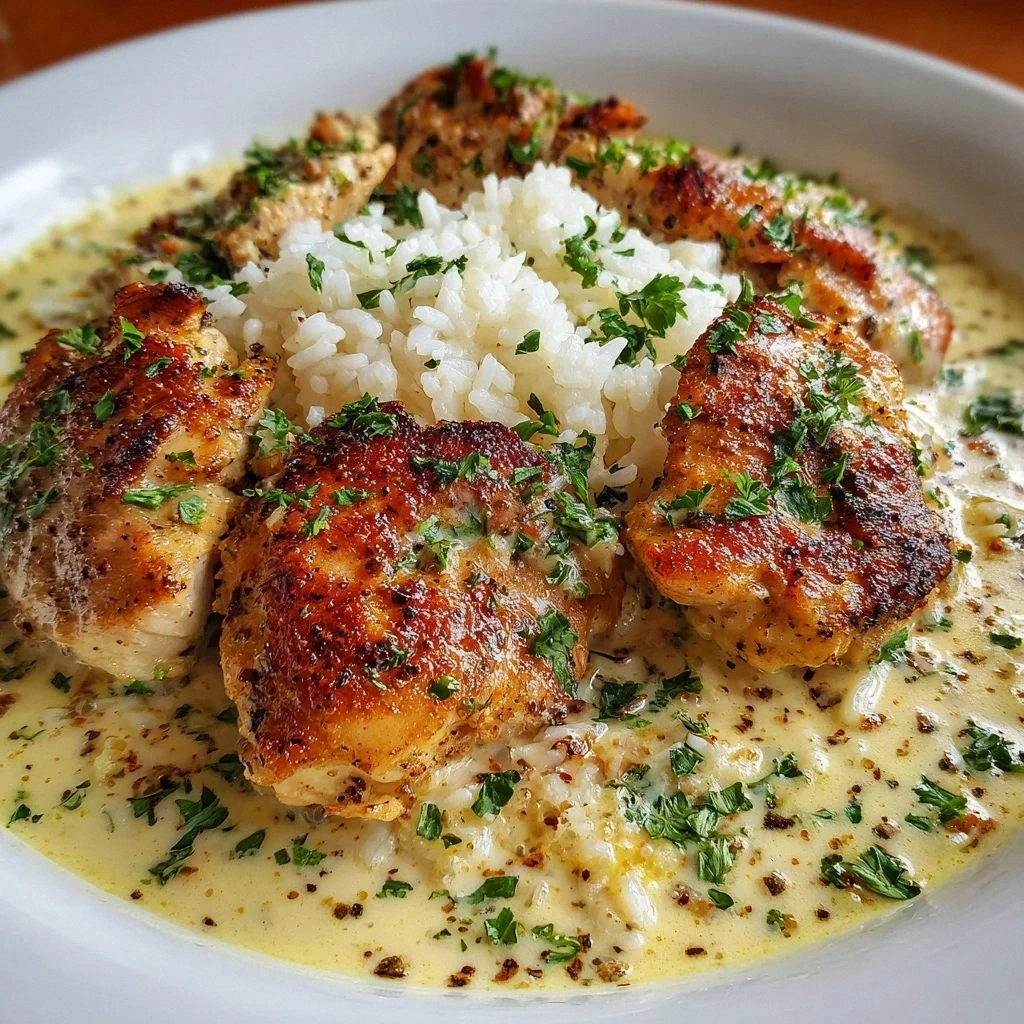
I still remember the night I ruined three chicken breasts so badly that even my garbage disposal gave me side-eye. It was 9:47 p.m., my dinner guests were arriving in forty-three minutes, and I had nothing but a smoking skillet, a half-empty carton of cream, and the kind of desperation that makes you consider serving cereal as a main course. Fast-forward through a frantic pantry raid, a whispered prayer to the culinary gods, and one reckless splash of heavy cream too many, and I stumbled onto the dish that would become my signature crowd-bamboozler: Creamy Smothered Chicken and Rice Delight is Irresistible! The first forkful silenced the table so completely you could hear the rice sighing beneath that velvet cloak of sauce. By the end of the evening my best friend—who claims to “loathe” chicken—was licking her plate like it was the last bus out of town. I dare you to taste this and not go back for seconds; I’ve seen grown adults arm-wrestle over the final scoop straight from the pot.
Picture yourself pulling this out of the oven, the whole kitchen smelling like a buttery cloud kissed by garlic and paprika, the sauce burbling like it’s gossiping with the rice. The chicken practically buckles under the weight of its own juiciness, and when you pierce it with a spoon the cream rushes in to fill every fiber until each bite feels like a warm sweater for your soul. That sizzle when it hits the pan? Absolute perfection. I’ll be honest—I ate half the batch before anyone else got to try it, standing over the stove in my socks, swearing I was “just tasting for seasoning.” If you’ve ever struggled with dry chicken or gloopy, floury sauces, you’re not alone—and I’ve got the fix that will make you feel like a kitchen wizard in real time.
Most recipes get this completely wrong: they either cook the chicken to rubber-mallet toughness or they drown everything in a bland, pasty sludge that tastes like kindergarten paste with poultry confetti. Here’s what actually works—patience, a single turn of seared glory, and a sauce that knows when to stop. Stay with me here—this is worth it. Okay, ready for the game-changer? We’re about to build layers like a symphony, starting with a mahogany sear and ending with cream so lusciously thick it clings to the rice like gossip in a small town. Let me walk you through every single step—by the end, you’ll wonder how you ever made it any other way.
What Makes This Version Stand Out
Velvet-Soft Chicken: Instead of dry, stringy slabs, you get melt-in-your-mouth pieces that stay juicy because we lock in the moisture with a quick, blazing-hot sear and then finish them gently in the sauce. The result is chicken that practically sighs when you cut it.
One-Pot Wizardry: Everything—sear, simmer, smother—happens in the same heavy skillet. Fewer dishes, more flavor because every brown bit (a.k.a. culinary gold) stays in the party instead of getting scrubbed down the sink.
Layered Sauce Depth: We bloom the spices in oil, deglaze with broth, then finish with cream so each spoonful tastes like someone reduced a French countryside into a saucepan.
Speed Without Sacrifice: From fridge to face-stuffing in 45 minutes flat, yet it eats like something that spent half a day in a low oven. Weeknight luxury is officially a thing.
Kid-to-Critic Approval: My spice-phobic nephew devours it, and my sommelier friend pairs it with a buttery Chardonnay and calls it restaurant-worthy. If that spectrum doesn’t prove universal domination, nothing will.
Make-Ahead Magic: The flavors deepen overnight, so you can cook on Sunday and coast through Monday with the easiest, most appreciated leftovers in your lunch-packing history.
Elevated Comfort: It scratches the same itch as those boxed rice mixes, but with real ingredients you can pronounce and a richness that makes your comfort-food spirit animal do backflips.
Alright, let’s break down exactly what goes into this masterpiece...
Inside the Ingredient List
The Flavor Base
Garlic and onion form the aromatic backbone, softening into sweet, mellow perfection while the paprika and Italian seasoning bloom in the olive oil like a mini Mediterranean sunrise. Skip either aromatics and you’ll end up with flat, one-note sauce that tastes like it gave up on its dreams. If you’re out of fresh garlic, a generous half-teaspoon of granulated works in a pinch, but fresh minced cloves give that spicy, nose-tingling perfume boxed powders can’t fake. For the onion, yellow is my ride-or-die because it melts into silken threads, though a sweet Vidalia will push you toward candy-level depth. Dice it small so it disappears into the cream, assuring picky eaters there are “no chunks” while still delivering all the flavor oomph.
The Texture Crew
Heavy cream is the silk scarf of the culinary world—luxurious, slightly sweet, and the only liquid that can reduce without breaking into an oily mess. Chicken broth stretches the sauce so it coats every rice granule without turning into wallpaper paste; go low-sodium so you control the salt narrative. Speaking of rice, use long-grain white for fluffy separation, or jasmine if you want subtle floral perfume riding shotgun. If brown rice is your hill to die on, budget an extra twenty minutes of simmer time and an extra splash of broth because those whole grains drink liquid like camels at an oasis.
The Unexpected Star
Paprika is usually the wallflower of the spice rack, but here it gets a full Cinderella moment, lending brick-red color and whisper-smoke that makes the cream taste like it slow-danced with a barbecue. I prefer regular sweet paprika for versatility, yet swapping in half-smoked paprika catapults the dish into “campfire chic” territory. Italian seasoning brings the herb bouquet—basil, oregano, thyme—so you don’t have to play spice-bottle Jenga. Don’t substitute chili powder unless you want a Tex-Mex tangent; the cumin will hijack the flavor road trip.
The Final Flourish
Boneless skinless chicken breasts or thighs soak up the sauce like edible sponges; thighs forgive overcooking better, but breasts give you those tidy, photogenic slices. Olive oil is your searing partner in crime, delivering steady heat and fruity notes under the spice confetti. Salt and black pepper are the old married couple—boring to read about, catastrophic to forget. Finish with chopped fresh parsley for a grassy pop that cuts the richness the way a squeeze of lime brightens street tacos. Without it the dish still tastes glorious, but you’ll miss that final splash of color that makes everyone instinctively say “wow” before they even dig in.
Everything’s prepped? Good. Let’s get into the real action...
The Method — Step by Step
- Heat a heavy 12-inch stainless or cast-iron skillet over medium-high for 90 seconds. You want it hot enough that the olive oil shimmers instantly but doesn’t smoke like a chimney—think confident, not panicked. Pat the chicken very dry with paper towels; moisture is the enemy of that gorgeous bronze crust we’re after. Season both sides with salt, pepper, paprika, and Italian seasoning, pressing the spices in so they stick like glitter on craft day.
- Lay the chicken away from you, hear that satisfying hiss, and then—this is key—do NOT touch it for four full minutes. Walk away, fold laundry, practice your acceptance speech for “Best Home Cook,” whatever keeps your spatula at bay. When the edges turn opaque halfway up the sides and the underside is the color of antique mahogany, flip once and sear the other side three minutes. Transfer to a plate; they’ll finish later in the sauce jacuzzi.
- Into the same glorious, flecked-with-gold pan, add diced onion and a pinch of salt. Stir for two minutes until the bits stuck on the bottom release like gossip at a reunion. Add garlic and cook 30 seconds—your kitchen should smell like you’re being hugged by a Tuscan nonna.
- Pour in the chicken broth and scrape aggressively with your wooden spoon. The liquid will deglaze all those flavor souvenirs and turn a beautiful burnished amber. Let it bubble for two minutes so the raw onion/garlic edge dissipates and the broth reduces by about a third; this concentrates taste and keeps the final sauce from swimming like soup.
- Reduce heat to medium-low and pour in the heavy cream in a slow, steady stream, whisking constantly. This next part? Pure magic. The cream will seize for a heartbeat, then relax into a pale caramel river. Keep stirring until you can draw a line across the back of your spoon and it holds for a second before the sauce reunites like reconciled lovers.
- Slide the chicken (and any resting juices) back into the pan. Spoon sauce over each piece, cover, and simmer gently for 8–10 minutes, depending on thickness. A digital thermometer should read 165 °F; if you don’t own one, slice the fattest piece—juices should run clear, not rosy.
- Fold in the cooked rice, stirring gently so each grain gets a glossy coat without turning the chicken to confetti. Let everything mingle uncovered for two final minutes so the rice can absorb sauce yet stay al dente. Taste, adjust salt/pepper, shower with parsley, and serve straight from the skillet for maximum rustic swagger.
That's it—you did it. But hold on, I've got a few more tricks that'll take this to another level...
Insider Tricks for Flawless Results
The Temperature Rule Nobody Follows
Room-temperature chicken sears faster and more evenly than fridge-cold meat, which tenses up like a nervous interviewee. Pull your chicken 15 minutes before cooking, let it lounge on the counter under a loose foil tent, and you’ll get that textbook crust without the raw center. A friend tried skipping this step once—let’s just say it ended with chicken that looked tanned on the outside and frozen in the middle, a culinary mullet nobody asked for.
Why Your Nose Knows Best
When the garlic hits the fat, count slowly to 30 and sniff. If the aroma is sharp and raw, give it another 15 seconds; if it smells nutty and you can almost taste sweetness, you nailed the sweet spot. This olfactory checkpoint prevents the bitterness that ruins cream sauces and keeps your kitchen smelling like a trattoria instead of a high-school cafeteria.
The 5-Minute Rest That Changes Everything
After the rice joins the party, kill the heat, cover, and let everything sit five minutes before serving. This pause allows the grains to drink up the last wave of sauce and the chicken fibers to relax so they don’t squirt juices all over your white tablecloth. Future you—doing laundry tomorrow—will high-five present you.
Spice Bloom = Flavor Boom
When you add paprika and Italian seasoning to the hot oil, stir for just 20 seconds until the mixture smells like you walked into an herb market at sunrise. Blooming releases essential oils that would otherwise stay locked in dormancy, giving you depth that screams “pro” rather than “jar of grocery-store dressing.”
Finish With Acid, Thank Me Later
A whisper of fresh lemon zest right before serving cuts the richness like a spotlight on a dim stage. Just 1/4 teaspoon micro-planed zest over the skillet is enough; more and you veer into lemon-chicken territory, less and you miss that high note that makes people close their eyes involuntarily.
Creative Twists and Variations
This recipe is a playground. Here are some of my favorite ways to switch things up:
Mushroom & Thyme Countryside
Swap half the chicken for meaty cremini mushrooms sliced thick. Sauté them in butter first until their liquid evaporates and the edges caramelize, then proceed as written. The thyme (use fresh if possible) marries with the paprika to taste like a log-cabin weekend in October.
Firecracker Cajun Style
Replace paprika with smoked paprika plus 1/4 teaspoon cayenne, and swap Italian seasoning for a Cajun blend heavy on oregano and thyme. Add diced bell pepper with the onion for holy-trinity vibes. Finish with thinly sliced green onions. If you like heat that sneaks up and hugs you, this variation is your new best friend.
Sun-Dried Tomato & Spinach Riviera
Stir in a handful of julienned sun-dried tomatoes and two big fistfuls of baby spinach during the final simmer. The tomatoes give tangy, umami bursts while the spinach wilts into silky ribbons that make the dish feel like summer on the Côte d’Azur even when it’s sleeting outside.
Broccoli & Cheddar Comfort Bake
Fold in blanched broccoli florets and a loose handful of sharp cheddar right at the end. Slide the skillet under the broiler for two minutes until the cheese freckles golden. Kids think it’s mac-and-cheese’s cooler cousin, adults appreciate the vegetable amnesty.
Lightened-Up Greek Yogurt Edition
Sub half the heavy cream with whole-milk Greek yogurt, whisked in off the heat to prevent curdling. Add lemon juice, oregano, and diced cucumber at the finish for a bright, almost stroganoff-like tang that won’t send you straight to nap land.
Seafood Swap Soirée
Use shrimp or scallops instead of chicken: sear them 90 seconds per side, remove, and add back during the final two minutes just to warm through. A pinch of saffron steeped in the broth elevates the whole affair into “special anniversary” territory without any extra effort beyond opening a spice jar.
Storing and Bringing It Back to Life
Fridge Storage
Cool leftovers completely, then pack into airtight glass containers (plastic traps odors and you’ll lose that fresh-cream perfume). It keeps four days, though good luck having any survive past Tuesday. Store rice and chicken together so the grains can continue their flavor education; just give it a gentle stir before reheating.
Freezer Friendly
Portion into freezer bags, press out every molecule of air, and freeze flat for easy stacking. It’s good for two months, but label it or you’ll forget and rediscover it during next year’s ice-cream excavation. Thaw overnight in the fridge, never on the counter unless you enjoy science experiments.
Best Reheating Method
Add a tiny splash of water or broth to a saucepan, dump in your portion, cover, and warm gently over medium-low heat, stirring occasionally. Microwave works in a pinch—use 50 % power in 45-second bursts, stirring between—so the sauce doesn’t separate into an oily mess that screams “leftover apology.”