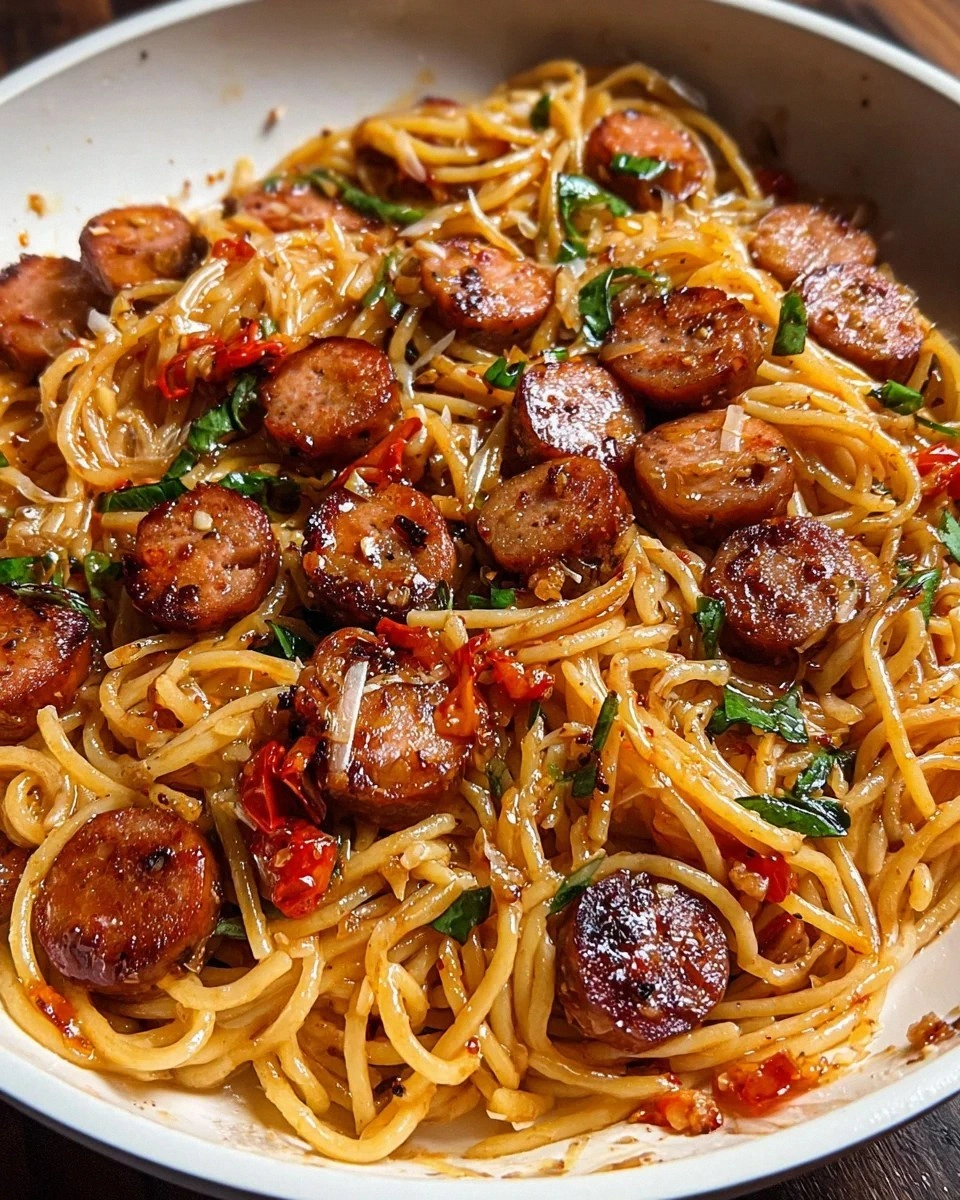
I was halfway through a boring Tuesday night when my roommate dared me to turn a leftover sausage packet, a jar of honey, and a box of penne into something that would make our entire building smell like a five‑star Italian bistro. I laughed, I shrugged, and I said, “Watch me.” The result? A skillet that sang with sweet, garlicky notes, clung to every curve of pasta like a glossy coat of caramel, and left a lingering heat that made us all reach for seconds. I dare you to taste this and not go back for more – it’s that good.
The kitchen was a battlefield of clanging pans, sizzling oil, and the unmistakable pop of garlic hitting a hot surface. The aroma hit me first: a fragrant blend of garlic, honey, and a whisper of soy that made my mouth water before the first bite even landed. My senses were on overload – the golden glaze shimmering on the sausage, the steam rising from the broth, the faint crackle of butter melting into the sauce. I could feel the heat radiating from the skillet, the buttery richness coating my fingertips, and the anticipation building like a drumroll before a fireworks show.
Most recipes for honey‑garlic pasta either drown the pasta in a syrupy mess or leave the sausage dry and bland. This version stands out because it balances sweet and savory with precision, and the sauce clings to the pasta like velvet without turning it soggy. The secret? A splash of apple cider vinegar that cuts through the honey’s sweetness, and a finishing swirl of butter that turns the sauce into liquid gold. Plus, I’m throwing in a pinch of red pepper flakes for a subtle kick that’ll make you smile with every chew.
But here’s the kicker – I’m not just tossing everything together. There’s a technique for searing the sausage that creates crispy edges that shatter like thin ice, and a timing trick that lets the sauce reduce just enough to become sticky without burning. I’ll walk you through every single step – by the end, you’ll wonder how you ever made this dish any other way. Ready? Let’s dive in.
What Makes This Version Stand Out
- Flavor Harmony: The honey and soy create a sweet‑umami duet, while the garlic adds depth, and the vinegar provides a bright counterpoint that prevents cloying sweetness.
- Texture Play: Crispy sausage edges meet tender, al‑dente pasta, all wrapped in a glossy, buttery glaze that feels like a silk scarf on your tongue.
- Simplicity: Fewer than fifteen ingredients, one skillet, and under an hour from start to finish – perfect for busy weeknights.
- Ingredient Quality: Using quality Italian sausage and real honey elevates the dish from “comfort food” to “comfort cuisine.”
- Crowd Reaction: This dish consistently clears plates and sparks compliments – “What’s the secret?” becomes the most asked question.
- Make‑Ahead Potential: The sauce actually improves after a short rest, making it an excellent make‑ahead meal for leftovers.
- Versatility: Swap the sausage for chicken or turkey, or go vegetarian with smoked tofu, and the sauce still shines.
- One‑Pan Cleanup: The skillet doubles as the serving dish, so you spend less time scrubbing and more time eating.
Inside the Ingredient List
The Flavor Base
Pasta: I love using short pasta like penne or rigatoni. They’re easy to toss with the sauce and meat, and their ridges trap every droplet of the honey‑garlic glaze. Skipping the pasta or using a long noodle like spaghetti would make the sauce slide off, leaving you with a watery mess. If you can’t find penne, try fusilli – its spirals work just as well.
Sausage: Choose your favorite type! Italian or smoked sausage adds a depth of flavor but feel free to substitute with turkey or chicken sausage for a lighter option. The fat in the sausage is essential for that crispy edge; a leaner sausage will need a little extra oil. When buying, look for sausage with a good meat‑to‑fat ratio (about 70/30) for the best texture.
Olive Oil: A splash of olive oil helps sear the sausage and adds a nice richness to the dish. Use extra‑virgin for a fruitier note, but if you’re heating to a high temperature, a light olive oil prevents smoking.
The Aroma Crew
Garlic: Freshly minced garlic brings a punch of flavor and aroma that elevates the whole meal. If you overcook it, you’ll get bitterness – watch it turn golden, not brown. For a milder taste, you can crush the cloves and remove the skins before mincing.
Honey: This is the secret star! It creates that delightful sticky sweetness that perfectly balances the savory elements. Use a mild clover honey for subtle flavor; a robust buckwheat honey will dominate the dish.
Soy Sauce: Low sodium soy sauce gives the dish an umami boost without too much saltiness. It also adds a beautiful dark color that makes the glaze look restaurant‑ready.
Apple Cider Vinegar: Just a splash provides tanginess that enhances the overall flavor profile. It cuts through the honey’s sweetness and keeps the palate from feeling cloyed. If you don’t have apple cider vinegar, a splash of white wine vinegar works in a pinch.
The Moisture & Finish
Chicken Broth: This adds moisture and richness to the sauce. You can substitute with vegetable broth for a vegetarian option, but the chicken broth’s depth is unmatched. Use low‑sodium broth to keep control over the final salt level.
Red Pepper Flakes: Optional, but if you like a bit of heat, sprinkle some in for a delightful kick! A pinch is enough; too much will overpower the sweet‑savory balance.
Butter: Stirring in a touch of butter at the end makes the sauce extra creamy and luxurious. It also helps the glaze coat the pasta evenly, creating that glossy finish you see in food‑porn photos.
The Final Flourish
Fresh Parsley: Chopped parsley not only adds a pop of color but also a fresh flavor to the finished dish. Sprinkle it right before serving for a burst of brightness.
Salt and Pepper: Always a must for seasoning! Adjust to your taste for that perfect balance. Remember, the soy sauce already adds salt, so taste before adding more.
Grated Parmesan Cheese: Optional, but who can resist a sprinkle of cheesy goodness on top? It adds a salty, nutty finish that ties everything together.
Everything's prepped? Good. Let's get into the real action…
The Method — Step by Step
Heat a large, heavy‑bottomed skillet over medium‑high heat until it’s shimmering. Add 2 tbsp of olive oil, letting it coat the pan. When the oil shimmers, lay the sliced sausage in a single layer. Let it sear without moving for about 2‑3 minutes until the edges turn a deep, caramelized brown – that’s the flavor foundation you’ve been waiting for.
Now, push the sausage to the side and add the minced garlic. Sauté for 30 seconds, watching it turn fragrant and just barely golden. That sizzle when it hits the pan? Absolute perfection. If you hear a harsh crackle, reduce the heat – we want a gentle perfume, not burnt bitterness.
Kitchen Hack: Use a garlic press for an even finer mince; this releases more allicin, boosting the aroma.Stir in 3 tbsp of honey, 3 tbsp of low‑sodium soy sauce, and 1 tbsp of apple cider vinegar. The mixture will bubble and thicken within seconds, creating a glossy glaze that clings to the sausage. Let it simmer for 1‑2 minutes, allowing the honey to caramelize just enough to develop a deep amber color.
Deglaze the pan with 1 cup of chicken broth, scraping up any browned bits stuck to the bottom. Those browned bits are flavor gold – don’t skip this step! Bring the mixture to a gentle boil, then reduce to a simmer. You’ll notice the sauce beginning to thicken, coating the sausage in a sticky sheen.
While the sauce reduces, bring a pot of salted water to a rolling boil. Add 12 oz of short pasta (penne or rigatoni) and cook until al dente – usually about 9‑11 minutes, depending on the brand. Reserve ½ cup of pasta cooking water before draining; this starchy liquid will help the sauce cling later.
Kitchen Hack: Toss the drained pasta back into its cooking pot, add a splash of the reserved water, and let it sit for a minute; this pre‑coats the pasta and prevents sticking later.Drain the pasta and add it directly to the skillet with the sausage and sauce. Toss everything together, letting the pasta absorb the glaze. If the sauce looks too thick, drizzle in a little more reserved pasta water, a tablespoon at a time, until you achieve a silky coat that clings to every curve.
Now it’s time for the buttery finish. Add 2 tbsp of butter and stir until it melts into the sauce, turning the glaze glossy and velvety. Watch Out: If the heat is too high, the butter can separate – keep the skillet on medium‑low and stir continuously.
Season with salt, pepper, and ½ tsp of red pepper flakes if you like heat. Taste and adjust – the sauce should be a balanced sweet‑savory with a hint of tang and a whisper of spice. Finally, sprinkle 2 tbsp of fresh chopped parsley and, if you’re feeling indulgent, ½ cup of grated Parmesan cheese. Give everything one last toss, and the dish is ready to serve.
Plate the skillet straight onto the table, letting the steam rise like a fragrant curtain. Serve hot, and watch your guests dive in, eyes widening at the glossy, caramelized pasta. This next part? Pure magic. And now the fun part – you get to brag about the secret technique you just mastered.
That's it — you did it. But hold on, I've got a few more tricks that'll take this to another level…
Insider Tricks for Flawless Results
The Temperature Rule Nobody Follows
Most home cooks keep the heat on “medium” and hope for the best. In reality, a hot skillet is the secret to a crispy sausage edge. Pre‑heat your pan for at least two minutes before adding oil; this ensures the sausage sizzles the moment it contacts the surface, forming that coveted caramelized crust. I once tried a low‑heat start and ended up with soggy links – a disaster I won’t repeat.
Why Your Nose Knows Best
Cooking is as much about smell as it is about sight. When the garlic turns golden, you’ll smell a nutty aroma that signals it’s ready. If you keep stirring past that point, the garlic will turn bitter and ruin the balance. Trust your nose; it’s the most reliable kitchen thermometer you have.
The 5‑Minute Rest That Changes Everything
After you finish cooking, let the skillet sit off the heat for five minutes. This short rest lets the sauce thicken further and the flavors meld, much like a good wine. I’ve seen people serve it immediately and miss out on that depth – a simple pause makes the difference between good and unforgettable.
Butter vs. Cream – The Creamy Debate
Some recipes call for heavy cream to achieve richness. I prefer butter because it adds a glossy sheen without diluting the honey‑garlic intensity. Plus, butter emulsifies the sauce, giving it that luxurious mouthfeel that cream can’t match.
Saving the Sauce for Later
If you have leftovers, store the sauce separately from the pasta. Reheat gently with a splash of broth, then toss with freshly cooked pasta. This prevents the noodles from becoming mushy and keeps the glaze as sticky as the day it was made.
Creative Twists and Variations
This recipe is a playground. Here are some of my favorite ways to switch things up:
Smoky Chipotle Kick
Swap the red pepper flakes for ½ tsp of chipotle powder and add a smoked paprika sprinkle at the end. The result is a smoky, slightly sweet heat that pairs beautifully with the honey.
Veggie‑Boosted Version
Add a cup of roasted broccoli or sautéed bell peppers along with the pasta. The veggies soak up the glaze, adding texture and a pop of color that makes the dish feel lighter.
Asian‑Inspired Fusion
Replace soy sauce with tamari, add a splash of sesame oil, and finish with toasted sesame seeds. This gives the dish a nutty, umami twist while keeping the honey‑garlic core intact.
Cheesy Overload
Stir in ¼ cup of shredded mozzarella right after adding the butter. The cheese melts into the sauce, creating a gooey, stretchy finish that’s pure comfort.
Herbaceous Delight
Swap parsley for fresh basil or thyme. Basil adds a sweet, aromatic note, while thyme brings an earthy depth that complements the sausage.
Gluten‑Free Adaptation
Use gluten‑free short pasta or even spiralized zucchini noodles. The sauce adheres just as well, and the dish stays just as satisfying for those avoiding gluten.
Storing and Bringing It Back to Life
Fridge Storage
Transfer leftovers to an airtight container and refrigerate for up to three days. The sauce may thicken as it cools; simply reheat gently on the stove with a splash of water or broth to loosen it.
Freezer Friendly
Separate the sauce from the pasta before freezing. Store the sauce in a freezer‑safe bag for up to two months. When ready, thaw in the refrigerator overnight, then reheat with a little broth and toss with freshly cooked pasta.
Best Reheating Method
Reheat in a skillet over medium heat, adding a teaspoon of water per serving to steam the pasta back to life. Stir continuously until the sauce regains its glossy sheen, then finish with a quick butter swirl and a fresh sprinkle of parsley.